
A portable power station can keep essential devices running during a Canadian cold snap, but freezing weather changes how its battery behaves. Output, charging, and storage limits are not interchangeable, so the manual matters more than the temperature shown on a weather app.
Cold does not automatically make a unit unsafe. It can reduce usable energy, slow chemical reactions, and trigger built-in protection. Good results come from keeping the battery dry, allowing airflow, and warming it correctly before charging.
What Freezing Weather Changes
Lithium batteries deliver less power efficiently when they are cold because ion movement slows inside the cells. A load that runs comfortably indoors may consume the same wattage outdoors while the battery percentage falls faster, especially after the unit has cold-soaked for several hours.
The battery-management system may restrict charging, discharging, or both when cell temperature leaves the approved range. That response protects the pack. It should not be defeated with external heaters, improvised insulation, or repeated restarts that ignore a low-temperature warning.
Cold-weather planning also starts earlier than the trip. Charge indoors, update firmware if the manufacturer directs it, and confirm alarms before departure. Beginning with a warm, full battery gives the protection system more room to manage changing conditions.
Read Three Temperature Ratings Separately
Check the exact manual rather than applying one product's limits to every model. A portable power station may have different thresholds for charging, powering loads, and storage, even when all three figures appear together. This distinction prevents confusing safe storage with safe charging.
Discharge Range
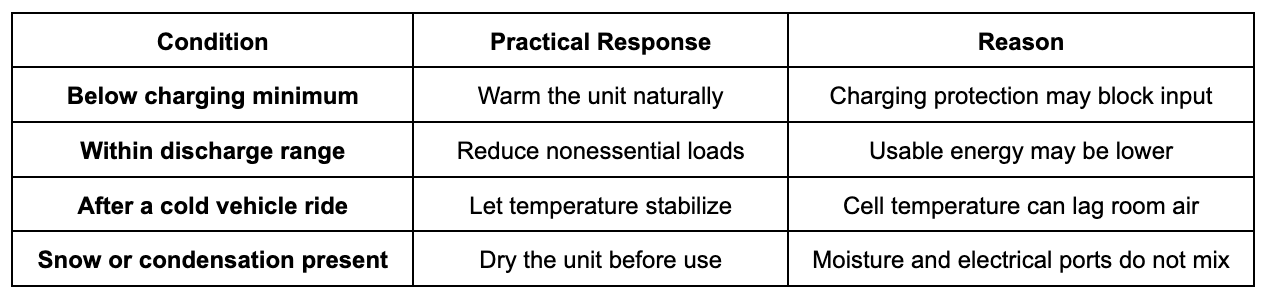
Some LFP units permit discharge below 0°C, but limits vary. EcoFlow lists -10°C to 45°C for DELTA 2 discharge. Permission to operate does not promise normal capacity or full output at the cold boundary.
Charging Range
Charging is usually stricter. EcoFlow lists 0°C to 45°C for DELTA 2 charging and includes low-temperature protection. If cells remain below the threshold, let the unit warm naturally before connecting wall, vehicle, or solar input.
Optimal Range
An allowed temperature is not necessarily efficient. DELTA 2 lists 20°C to 30°C as optimal. Treat operation near a published minimum as a reduced-performance case, not the basis for a tight winter runtime estimate.
Storage Range
Storage limits describe an idle unit, not immediate charging permission. A portable power station from a frozen vehicle may remain cold internally after its case feels warmer. Let cell temperature stabilize before connecting an input.
Battery Temperature, Not Air Alone
Weather reports measure ambient conditions, while protection responds to the pack. Sunlight, a warm vehicle, recent discharge, and shelter create differences. Use the device temperature reading when available and follow warnings instead of judging cells by touch.
Plan Capacity and Shelter Together
Winter runtime depends on both energy demand and where the unit sits. Keep the portable power station in a dry, ventilated space within its approved environment. Do not seal operating electronics inside an airtight box, and never place the unit beside a stove, open flame, vehicle exhaust, or combustible fuel.
Build a Cold-Weather Margin
Start with each device's wattage and planned hours, then add conversion losses and a cold-weather reserve. Avoid promising a fixed percentage because battery chemistry, load size, and temperature differ. A conservative plan leaves enough energy for lighting, communications, and the trip home.
Use a Placement Check
Moisture can matter as much as temperature. Snow carried indoors melts, and condensation may form when cold equipment enters warm air. Keep ports dry, protect the unit from precipitation, and wait before connecting cables if moisture appears on or around the case.
A Two-Stage Winter Checklist
Before leaving, confirm the manual, charge level, cables, and total load indoors. Test the actual appliances, because a successful phone charge says little about starting a larger motorized or heating load.
- Record the model's charge, discharge, and storage limits.
- Measure or verify every essential appliance's running wattage.
- Pack cables where their insulation will not be crushed.
At the site, move the portable power station between temperatures gradually. Inspect for moisture, preserve ventilation, and connect essential loads first. If a warning appears, disconnect nonessential devices and follow the manual instead of cycling the switch repeatedly.
- Check the battery-temperature indicator before charging.
- Keep snow, wet gloves, and fabric away from vents.
- Save reserve energy for communications and safe lighting.
Avoid Common Cold-Weather Mistakes
Most winter failures come from treating the battery like a sealed fuel tank. A portable power station is an electronic system with temperature sensors, an inverter, and ventilation needs. Respecting those systems produces more reliable service than trying to trap every possible degree of warmth.
Charging a Frozen Pack
Do not assume sunshine makes solar charging acceptable below the battery's limit. The panel may produce current while the pack remains too cold. Wait until the device confirms an allowed temperature, even if that shortens the day's available charging window.
Blocking the Cooling Vents
Wrapping the entire unit in blankets can obstruct airflow after the inverter starts working. Use a dry, protected location instead of tight insulation. A case designed to reduce weather exposure should still preserve the clearances and ventilation specified by the manufacturer.
Using Direct Heat
Do not place a portable power station against a furnace, wood stove, space heater, or heating pad. Local hot spots can exceed safe limits before the whole battery warms. Bring the unit into a moderate room and let temperature equalize without forced heating.
Leaving It in a Vehicle
A parked vehicle can remain far below freezing overnight and then warm rapidly in sunlight. Repeated cold soaking, condensation, and forgotten low charge complicate emergency readiness. Store the unit within its published range and check its state of charge on a schedule.
The Practical Answer
Yes, a suitable portable power station can operate in freezing weather when the exact model permits discharge at that temperature. Expect less predictable runtime near the limit, keep the equipment dry and ventilated, and preserve a meaningful energy reserve.
Charging requires more caution than discharging. Warm the cells into the approved charging range, follow device warnings, and never improvise with direct heat. Record what worked after each trip so future winter runtime and charging plans use real local experience for future trips.