
Congratulations! You are about to embark on one of the most rewarding journeys a person can take. Owning a horse in Canada offers breathtaking trail rides through the Rockies, crisp morning gallops in the Maritimes, and a unique bond with a majestic animal.
However, Canada’s diverse climate and vast geography mean that horse ownership here requires specific preparation. From prepping for a -30°C winter to navigating the local market, this checklist will ensure you and your new partner are set up for success.
1. Finding Your Perfect Partner
Before you worry about saddles or hay, you need the horse. The Canadian equestrian community is tight-knit, but the search can still feel overwhelming. Many riders begin their journey by browsing listings for horses for sale to get a feel for the current market prices and breed availability in their province.
- Trial Period: Always ask if a trial is possible.
- Pre-Purchase Exam (PPE): Never skip this. Have a trusted veterinarian check the horse’s health and soundness before money changes hands.
- Suitability: Be honest about your riding level. A "project horse" might be cheaper, but a seasoned schoolmaster is often worth its weight in gold for a new owner.
2. Facilities and Shelter
Whether you are boarding at a professional stable or keeping your horse on your own acreage, the Canadian elements require sturdy infrastructure.
Winter-Ready Housing
In many parts of Canada, a simple three-sided run-in shed is the minimum requirement. It provides a windbreak and protection from freezing rain. If you are stalling your horse, ensure the barn has proper ventilation. Trapped ammonia and dust can lead to respiratory issues like heaves, which are common in horses kept indoors for long winters.
Fencing Safety
Safe fencing is non-negotiable.
- Wood Post and Rail: Classic and visible, but requires maintenance.
- Electric Tape/Braid: Excellent for internal divisions and visibility.
- Avoid Barbed Wire: It is notoriously dangerous for horses, often leading to severe "fence " injuries.
3. The Canadian Winter Survival Kit
Winter isn’t just a season in Canada; it’s a lifestyle. Your checklist must include items that can withstand extreme cold.
- Blankets: You will likely need a wardrobe of blankets, including a lightweight rain sheet, a medium-weight turnout, and a heavyweight (300g+) rug for those polar vortex nights.
- Heated Waterers: A horse that doesn’t drink is a horse at risk for impaction colic. Invest in a high-quality tank heater or an insulated automatic waterer to ensure they have access to liquid water 24/7.
- Traction: If you plan on riding or even just turning your horse out in icy conditions, talk to your farrier about "borium" or ice studs for their shoes.
4. Nutrition and Forage
A horse’s digestive system is their "internal furnace." During a Canadian winter, they stay warm by fermenting fiber in their hindgut.
- Hay Sourcing: Secure your hay supply in late summer or early fall. Prices often skyrocket in the spring when supplies run low.
- Salt and Minerals: Canadian soil can be deficient in certain minerals like selenium. Provide a high-quality mineral block specifically formulated for your region.
- Weight Management: It is harder to see a horse’s ribs under a thick winter coat. Perform regular "hands-on" body condition checks to ensure they aren't losing weight under all that fluff.
5. Your Healthcare Team
You are only as good as the experts you hire. Start building your "horse's village" before the horse arrives at the trailer.
- The Veterinarian: Find a local equine vet and keep their emergency number on speed dial. Ensure your horse is up to date on Core Vaccines (Rabies, Tetanus, EEE/WEE, and West Nile).
- The Farrier: Horses need their feet trimmed or shod every 6 to 8 weeks, regardless of whether they are being ridden.
- The Equine Dentist: Dental floats should happen once a year to prevent sharp points from causing mouth sores.
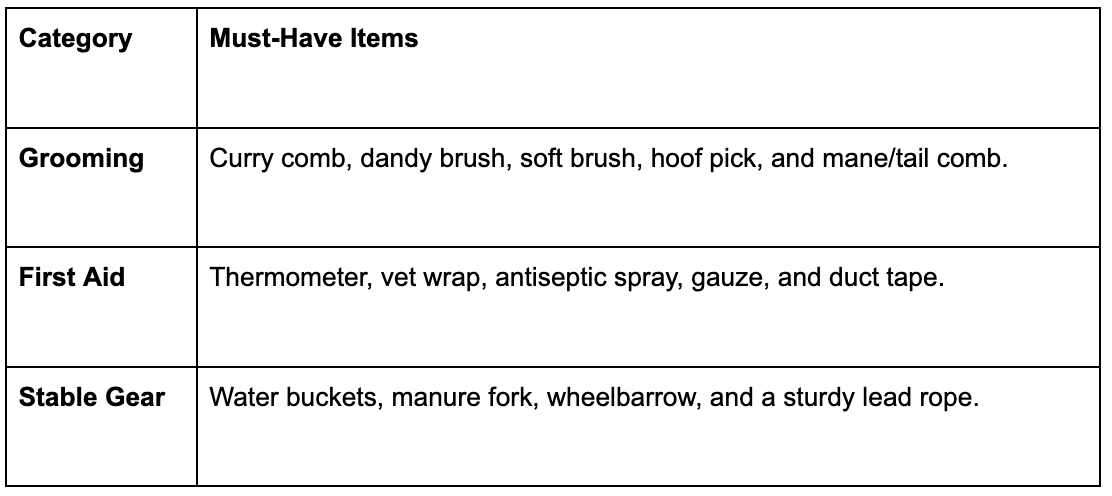
6. Essential Tack and Grooming Gear
Beyond the saddle and bridle, you need a basic kit for daily maintenance.
7. Legal and Insurance Considerations
Horse ownership carries a level of liability. In Canada, many owners choose to join their provincial equestrian federation (such as Horse Council BC, Alberta Equestrian Federation, or Ontario Equestrian).
Membership often includes automatic liability insurance, which protects you if your horse causes damage to third-party property or persons. Additionally, consider "Full Mortality" and "Major Medical" insurance for the horse itself to avoid devastating bills in the event of a surgical emergency.
Final Thoughts
Being a horse owner in Canada is a massive commitment, but there is nothing quite like the sound of a happy nicker across a snowy paddock. By checking off these essentials—from finding the right horses for sale to prepping your winter blankets—you’re setting the stage for a long, healthy partnership.