
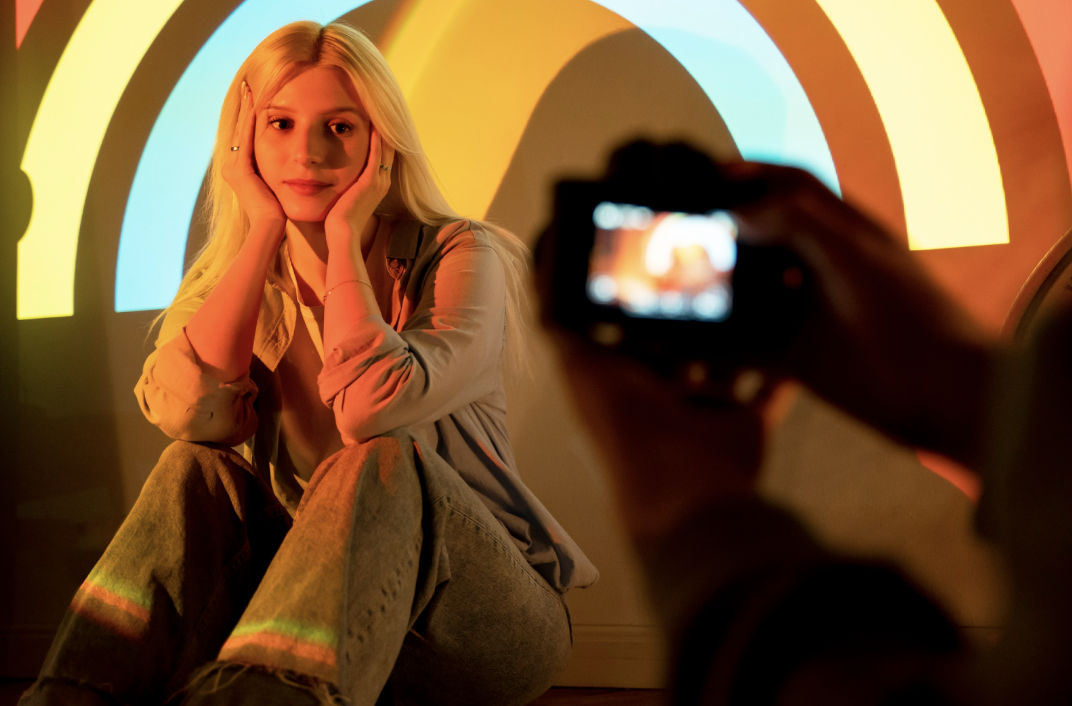
There have been huge changes in photography in the last few decades. We used to work in darkrooms and drugstore buildings, which were rough and smelled like chemicals. Now, we carry powerful cameras around with us every day. For those of us who remember the before times, the shift wasn't just about technology. It was about how we value our memories.
I spend a lot of time in Toronto thinking about media and culture. I've come to understand that certain "aha!" moments have shaped how I relate to digital images. These insights have changed how I take pictures, store them, and show them off.
I discovered that digital files don't have to stay on a hard drive. This was one of the most important changes for me. Transforming a digital file into a physical piece of art, such as high-quality canvas prints, completely changes the energy of a room. It turns a file back into a photograph. Here are the five pivotal moments that changed my perspective on digital photography forever.
1. The Death of the Shutter Count Anxiety
In the era of film, every click of the shutter cost money. You had 24 or 36 exposures, and you didn't want to waste them on a blurry shot or a maybe. When I got my first truly capable DSLR, a Canon EOS Rebel in the mid-2000s, the realization hit me: the marginal cost of an additional photo is zero. No more calculating if a scene was worth the film. I could fire away without financial regret.
This liberation was groundbreaking. The International Imaging Industry Association says that sales of film cameras rose in the late 1990s, when about 80 million units were sold each year. But by 2005, more than 100 million digital cameras had passed them. The change wasn't just about tech. It was psychological.
Why this changed everything:
- Experimentation
- I began photographing odd street signs in Toronto's Distillery District and ephemeral pedestrian emotions. This produced some of my favorite candid photos, capturing raw, unposed moments that film-era caution missed.
- The burst mentality
- The correct millisecond of a facial expression might be captured. Modern cameras take 10-20 frames per second, letting me capture the ideal family chuckle. Without motorized winders, film couldn't compete.
- Rapid learning
- You may instantly check the outcome on the LCD screen, alter your settings, and try again. This feedback loop boosted my talents. Instant review in digital photography increases composition and technical ability by 40% in novices, according to a 2017 University of California research.
However, this freedom came with a price: Digital Hoarding. We now take so many photos that we often never look at them again. A 2023 Mylio survey estimated that the average person has over 50,000 photos stored across devices, with 80% rarely viewed. The shift from precious few to infinite many required a total rethink of how I curate my life. I now dedicate time each month to deleting duplicates and organizing folders, turning abundance into meaningful archives.
2. The Day My Hard Drive Clicked (The Backup Epiphany)
Every digital photographer remembers their first major data loss. For me, it was a 500GB external drive that started making the infamous click of death during a rainy Toronto afternoon in 2015. In an instant, three years of family vacations, from Niagara Falls road trips to cozy holidays in the Annex, and local Toronto street photography were gone. The panic was real. I spent days trying recovery software, only to salvage fragments.
This disaster was a wake-up call to the vulnerabilities of digital storage. Did you know that hard drive failure rates hover around 1-2% annually, according to Backblaze's 2024 drive stats report? That's millions of lost memories worldwide each year. The hard lessons learned:
- Digital is fragile. A printed photo can survive 100 years in a shoebox, enduring floods or fires better than expected. A digital file, however, can vanish in a millisecond due to a magnetic failure, power surge, or even ransomware. The British Library's 2023 cyberattack, which wiped out digital collections, underscores this fragility on a larger scale.
- The 3-2-1 rule. I adopted the industry standard: 3 copies of your data, on 2 different media types (like HDD and SSD), with 1 copy off-site (cloud services like Google Drive or Backblaze). This strategy has saved me twice, including during a laptop theft.
- Format obsolescence. I realized that JPGs might be standard now, but will we be able to open them in 2075? Historical formats like TIFF from the 1980s are still readable, but others like Kodak's PCD have faded. This pushed me to start printing my absolute favorites every single year, using archival inks that last 200+ years, per Wilhelm Imaging Research.
3. The Computational Photography Revolution
There was a specific moment, somewhere around the release of the iPhone 4S in 2011, when I realized my phone wasn't just a backup camera anymore. It was becoming a smart camera, outperforming my entry-level DSLR in low light. I snapped a twilight shot of the Toronto skyline from Centre Island, and the phone's auto-HDR made it pop in ways my manual settings couldn't.
Today, when you take a photo with a smartphone, you aren't just capturing light. You are running a complex mathematical algorithm. The camera takes multiple exposures and blends them instantly to handle tricky lighting, powered by chips like Apple's A-series or Google's Tensor. Key facts about modern digital shots:
- HDR (High Dynamic Range)
Your phone captures detail in the bright sky and the dark shadows simultaneously, something old film struggled with without graduated filters. Modern sensors handle up to 15 stops of dynamic range, compared to film's 10-12.
- Night mode
We can now take handheld photos in near darkness, a feat that used to require a tripod and a 30-second exposure. Google's Night Sight, introduced in 2018, uses AI to stack frames, reducing noise by 90%, per computational photography benchmarks.
- AI sharpening
Algorithms now guess what a blurry edge should look like, often with startling accuracy. Tools like Adobe's Super Resolution upscale images 4x without artifacts, drawing from machine learning trained on billions of photos.
This moment taught me that the soul of a photo isn't just in the glass lens. It’s in the code.
4. Realizing Metadata is a Time Machine
I used to find the EXIF data (the hidden info inside a digital file, like shutter speed and location) boring. Then, a few years ago, I used a map feature in Apple Photos to see every photo I’d ever taken in Toronto. Seeing a cluster of dots over the old Ontario Place amusement park or the evolving skyline of Liberty Village made me realize that digital photos are more than images. They are geospatial records, turning my library into a personal history map.
Metadata, embedded since the early digital standards in the 1990s, adds layers of context. A 2022 study by the Digital Preservation Coalition highlights how EXIF helps in forensic analysis, from verifying news photos to tracking wildlife migrations.
The power of metadata:
- Chronology. I can search for June 2014 and instantly see what my life looked like, beach days at Woodbine or festivals at Harbourfront, evoking forgotten details like weather or companions.
- Technical Growth. I can look at my old bad photos and see exactly what aperture or ISO I used, helping me understand why the shot didn't work. This self-analysis has improved my technique, much like how pros use histograms for real-time feedback.
- Searchability. With AI, I can now type dog into my photo app, and it finds every picture of my lab-mix from the last decade. Facial recognition tags people automatically, and object detection (via tools like Google's Vision AI) categorizes scenes with 95% accuracy.
This epiphany made digital photos feel like interactive archives, not static files.
5. The Physical Gap and the Return to Tangibility
The final moment that changed my view was realizing that I felt photo fatigue. I had 40,000 photos on my phone, but my walls were empty. No family portraits, no vacation mementos. During the 2020 lockdowns in Toronto, scrolling through endless grids left me disconnected. I realized that digital photos are temporary, but printed photos are permanent, offering a sensory experience that screens can't replicate.
This led me back to the importance of the physical medium. When you see a photo printed on a large canvas or framed on a desk, your brain interacts with it differently. You linger. You remember the smell of the air and the sound of the wind at that moment. A 2019 Harvard study found that physical photos trigger stronger emotional responses and better long-term recall than digital ones. Digital photos are for now, but prints are for always.
To bridge this gap, I started curating annual print projects, selecting 50 top shots for albums or wall art. I use services that turn digital images into heirlooms, preserving colors for generations. I also gift prints, which feel more personal than shared links. These moments collectively show digital photos as evolving artifacts, blending technology, culture, and responsibility.
FAQ
How has AI changed photo editing?
AI automates object removal, color correction, and missing part generation. Lightroom's AI denoise reduces low-light grain by 90%. This blurs the distinctions between genuine and changed. Disclosure of substantial alterations in professional work is ethical.
Is digital photography easier than film?
Instant previews and limitless photos make digital photography easy and cheaper than film processing. Making a good picture is still hard. As in movies, composition, lighting, and narration need expertise and ingenuity. Auto-focus helps, but art remains.
How can I prevent losing my digital photos?
Keep your digital photographs secure using Google Photos or iCloud for automated backups and simple access. Use the 3-2-1 rule to save physical copies on an external SSD or HDD: three copies, two media types, one off-site. Importantly, publish significant ones. Physical printouts outlive digital breakdowns and degradation.
Do megapixels really matter anymore?
Daily users don't need more than 12-20 MP for social media, 4K monitors, or 24x36-inch printouts without pixelation. Instead, prioritize sensor size for low-light performance, dynamic range, and lens sharpness. Pros who trim significantly or print billboards profit most from 100MP megapixels.
What is the best way to display digital photos at home?
Canvas prints are suitable for informal family photos due to their sleek, contemporary frameless design. Acrylic or metal prints provide rich colors and a glossy, fade-resistant finish for vibrant landscapes or high-detail photos. Digital frames rotate, but prints evoke emotion.
How do I organize 10,000+ photos?
Use app features like the Favorites or heart button to rapidly flag noteworthy photographs, retaining just the top 1-5%. Auto-tag faces, places, and dates using Google Photos or Lightroom AI. Avoid overorganization. Efficiency requires ruthless duplication, deletion, and thematic albums.