
Did you know that concrete leveling can extend the lifespan of structures by up to 30 years compared to traditional replacement methods? This innovative solution is not only cost-effective but also environmentally friendly, reducing the carbon footprint by approximately 50%.

Instead of tearing out and replacing sunken slabs, concrete raising involves filling voids beneath the surface to restore its original level. This process minimizes downtime, avoids costly demolition, and preserves existing surfaces. It’s a win-win for both your wallet and the planet.
From improved safety to enhanced drainage, this technique offers numerous benefits. Whether you’re dealing with uneven driveways or sinking sidewalks, this guide will walk you through the steps to plan and execute a successful project. Let’s explore how this sustainable solution can transform your property.
Understanding Concrete Settling Issues
Have you noticed uneven surfaces around your home? Settling slabs are a common problem that can lead to bigger issues if left unaddressed. Understanding the causes and implications can help you take proactive steps to maintain your property.
Causes of Concrete Settlement
Several factors contribute to slab settling. Poor soil compaction during construction is a major culprit. When the soil beneath a slab isn’t properly compacted, it creates voids that cause the surface to sink over time.
Climate also plays a role. Freezing and thawing cycles in winter can push slabs upward, while dry conditions cause soil to shrink. Expansive clay soils, common in warmer regions, absorb water and expand, leading to uneven surfaces.
Erosion is another factor. Water runoff can wash away soil beneath slabs, creating gaps that lead to settling. These issues are often seen in driveways, sidewalks, and patios.
Implications for Homeowners
Uneven slabs aren’t just an eyesore—they can pose serious risks. Trip hazards are a common concern, especially on walkways and stairs. Water drainage issues can also arise, leading to pooling and potential damage to your property.
Early detection is key. Addressing settling slabs promptly can prevent costly repairs and ensure safety. Whether it’s a driveway or sidewalk, maintaining a level surface is essential for both functionality and aesthetics.
Cause
Effect
Poor Soil Compaction
Voids beneath slabs
Freeze-Thaw Cycles
Upward movement of slabs
Soil Erosion
Gaps under slabs
Expansive Clay Soils
Uneven surfaces
Choosing the Right Concrete Leveling Method
Not all leveling methods are created equal—choosing the best one depends on your needs. Whether you’re dealing with a sinking driveway or an uneven patio, understanding the options ensures a durable and cost-effective solution. Let’s explore the three primary techniques: stone slurry grout, polyurethane foam, and mudjacking.
Stone Slurry Grout Leveling
This method uses a mixture of pulverized limestone, water, and sometimes Portland cement. The slurry is pumped beneath the slab to fill voids and create a stable base. It’s a dense and durable solution, ideal for larger areas with moderate settling.
Stone slurry grout is less invasive than mudjacking and more economical than polyurethane foam. It’s perfect for outdoor surfaces like driveways and sidewalks, where stability and cost-effectiveness are priorities.
Polyurethane Foam Concrete Lifting
Polyurethane foam involves a two-part chemical reaction that produces an expanding foam used for concrete lifting. This lightweight and fast-curing material raises slabs quickly, often within an hour. It’s ideal for decorative areas where aesthetics matter.
With dime-sized drill holes, this method leaves minimal traces after patching. While it’s more expensive, its eco-friendly and long-lasting nature makes it a popular choice for modern projects.
Mudjacking Explained
Mudjacking uses a slurry of sand, soil, and water, pumped at high pressure to lift slabs. It’s one of the oldest and most cost-effective methods, suitable for large, heavy-duty areas like garage floors.
However, it requires larger drill holes and longer curing times. While it’s durable, it’s not ideal for high-traffic or decorative spaces due to its less refined finish.
Choosing the right method depends on the job size, soil conditions, and desired durability. Each technique offers unique benefits, ensuring there’s a solution for every situation.
How to Execute Your Concrete Raising Project
Ready to tackle your next home improvement project with confidence? Restoring uneven surfaces doesn’t have to be overwhelming. With the right approach, you can achieve professional results while saving time and money. Let’s break down the steps and tools you’ll need to get the job done right.
Step-by-Step Process
The first step is to assess the area. Experts identify voids and determine the best injection points for even lifting. This ensures the surface is restored to its original level without further issues.
Next, small holes are drilled into the slab. These holes, typically ⅝ inches for polyurethane foam, allow access to the voids beneath. The size and placement are crucial for effective results.
Once the holes are prepared, a lifting compound is injected. Polyurethane foam is a popular choice due to its lightweight and fast-curing properties. It expands to fill voids and lifts the slab evenly.
Finally, the holes are patched to complete the repair. This step ensures a smooth, durable surface that blends seamlessly with the surrounding area.
Tools and Equipment Needed
To execute this project, you’ll need specialized tools. A drilling rig is essential for creating precise holes. Specialized pumps are used to inject the lifting compound efficiently.
Safety gear, such as gloves and goggles, is also important. High-quality polyurethane foam ensures long-lasting results. Proper equipment makes the process smoother and more effective.
With the right tools and techniques, you can restore your property’s surfaces with ease. Whether it’s a driveway, patio, or sidewalk, this method delivers lasting results.
Concrete Raising Cost Overview
Understanding the cost of leveling uneven surfaces can help you plan your project effectively. Whether you’re fixing a driveway, patio, or sidewalk, knowing the price range ensures you stay within budget.
Estimating Your Project Cost
The price of leveling depends on several factors. For example, polyurethane foam lifting typically ranges from $5 to $25 per square foot. Sidewalk repairs can cost between $750 and $2,400, while driveways may range from $1,215 to $5,670.
Smaller areas, like A/C pads, often start at $1,015. Larger projects, such as pool decks, can reach up to $5,940. These variations highlight the importance of getting a detailed estimate for your specific needs.
Pricing Variables and Considerations
Several factors influence the final cost. The size of the area and the depth of voids play a significant role. Larger projects require more materials and labor, increasing the overall price.
Regional differences also matter. Labor and material costs vary across the U.S., affecting the total expense. Accessibility challenges, like navigating around obstacles, can add to the project complexity and cost.
To avoid surprises, most businesses offer free onsite estimates. This ensures you get an accurate quote tailored to your situation.
Service
Price Range
Sidewalk Leveling
$750 - $2,400
Driveway Leveling
$1,215 - $5,670
Patio Leveling
$1,215 - $4,725
Pool Deck Leveling
$2,025 - $5,940
A/C Pad Leveling
$1,015 - $2,485
By understanding these factors, you can make informed decisions about your project. Balancing quality service and cost ensures you get the best value for your investment.
Concrete Raising: A Sustainable Alternative in Practice
Why replace when you can repair and restore? Modern techniques like concrete leveling offer a smarter, eco-friendly way to fix uneven surfaces. This method not only saves time and money but also reduces waste and environmental impact. Let’s explore how this approach benefits both your property and the planet.
Long-term Benefits
One of the biggest advantages of concrete lifting is its durability. Unlike full replacement, this method strengthens existing slabs, extending their lifespan by decades. It also reduces the need for frequent repairs, saving you time and effort in the long run.
Additionally, concrete leveling creates safer, more consistent surfaces. Whether it’s a driveway, patio, or sidewalk, this technique eliminates trip hazards and improves drainage. Regular maintenance, like sealing, can further enhance its longevity.
Environmental Impact
Traditional replacement methods generate significant waste, with demolished slabs often ending up in landfills. In contrast, concrete lifting reuses existing materials, minimizing debris and conserving resources.
This process also reduces energy consumption. Producing new concrete is energy-intensive and contributes to global CO2 emissions. By avoiding this, concrete leveling aligns with eco-conscious practices, making it a greener choice.
Comparison with Full Replacement
When comparing concrete lifting to full replacement, the differences are clear. Lifting is faster, often completed in just a few hours, while replacement can take days or weeks. It’s also more cost-effective, saving homeowners up to 50% on repair costs.
Here’s a quick comparison of the two methods:
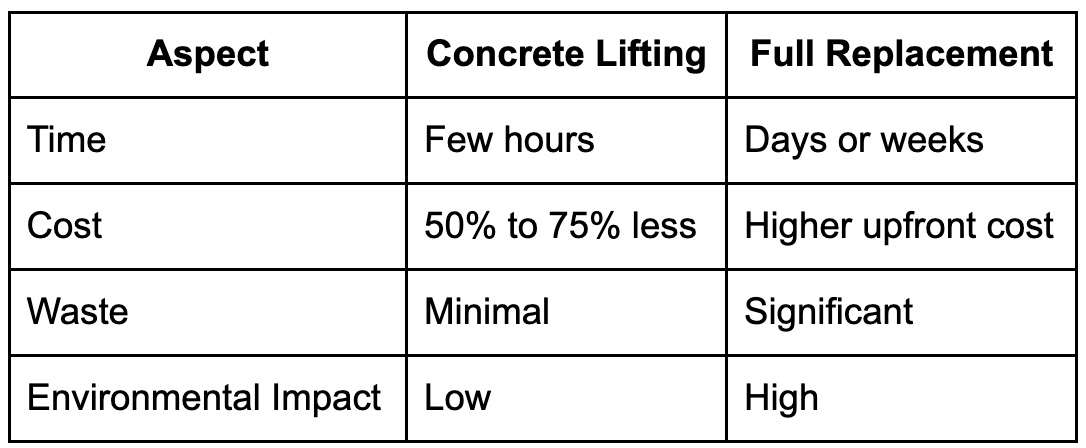
By choosing concrete leveling, you’re not just fixing a problem—you’re making a sustainable choice that benefits your property and the environment.
Practical Tips for Successful Concrete Repair
Planning a successful repair project starts with proper preparation and expert guidance. Whether you’re fixing a driveway, patio, or sidewalk, these tips will help you achieve lasting results while avoiding common pitfalls.
Preparing Your Property
Before starting any repair, assess the area carefully. Look for trip hazards, cracks, or uneven surfaces that need attention. Mark these zones to ensure safety during the project.
Clean the work area thoroughly. Remove debris, dirt, and any obstacles that could interfere with the repair process. This step ensures a smooth and efficient workflow.
Consider weather conditions. Avoid scheduling repairs during heavy rain or freezing temperatures, as these can affect the curing process. Allocate adequate time for the project to avoid rushing.
Working with Professionals vs. DIY
Hiring a professional service offers several advantages. Experts have the tools and experience to handle complex repairs efficiently. They can also identify underlying issues, like soil erosion, that DIY methods might miss.
DIY repairs can be tempting for smaller projects, but they often lack the precision of professional work. Mistakes can lead to further damage, increasing costs in the long run. For larger areas like driveways or slabs, professional help is recommended.
When choosing a service, look for experienced contractors with positive reviews. A reliable business will provide a detailed estimate and explain the process clearly, ensuring transparency and trust.
By following these tips, you can ensure a successful repair project that enhances your property’s safety and appearance. Whether you choose DIY or professional help, proper planning is key to achieving durable results.
Conclusion
Choosing the right repair method can save you time and money. Techniques like polyurethane foam, mudjacking, and stone slurry grout offer efficient, eco-friendly solutions for uneven surfaces. These methods not only restore your slab but also enhance safety and durability for years to come.
Working with professional services ensures precision and quality. Proper equipment and detailed estimates are essential for long-term success. A well-executed repair safeguards your property value and eliminates hazards like trip risks or water pooling.
For the best results, consider the detailed steps and practical tips shared in this guide. Whether it’s a driveway, patio, or floor, these solutions provide lasting benefits. Ready to start? Reach out to a trusted business for a free onsite estimate today.